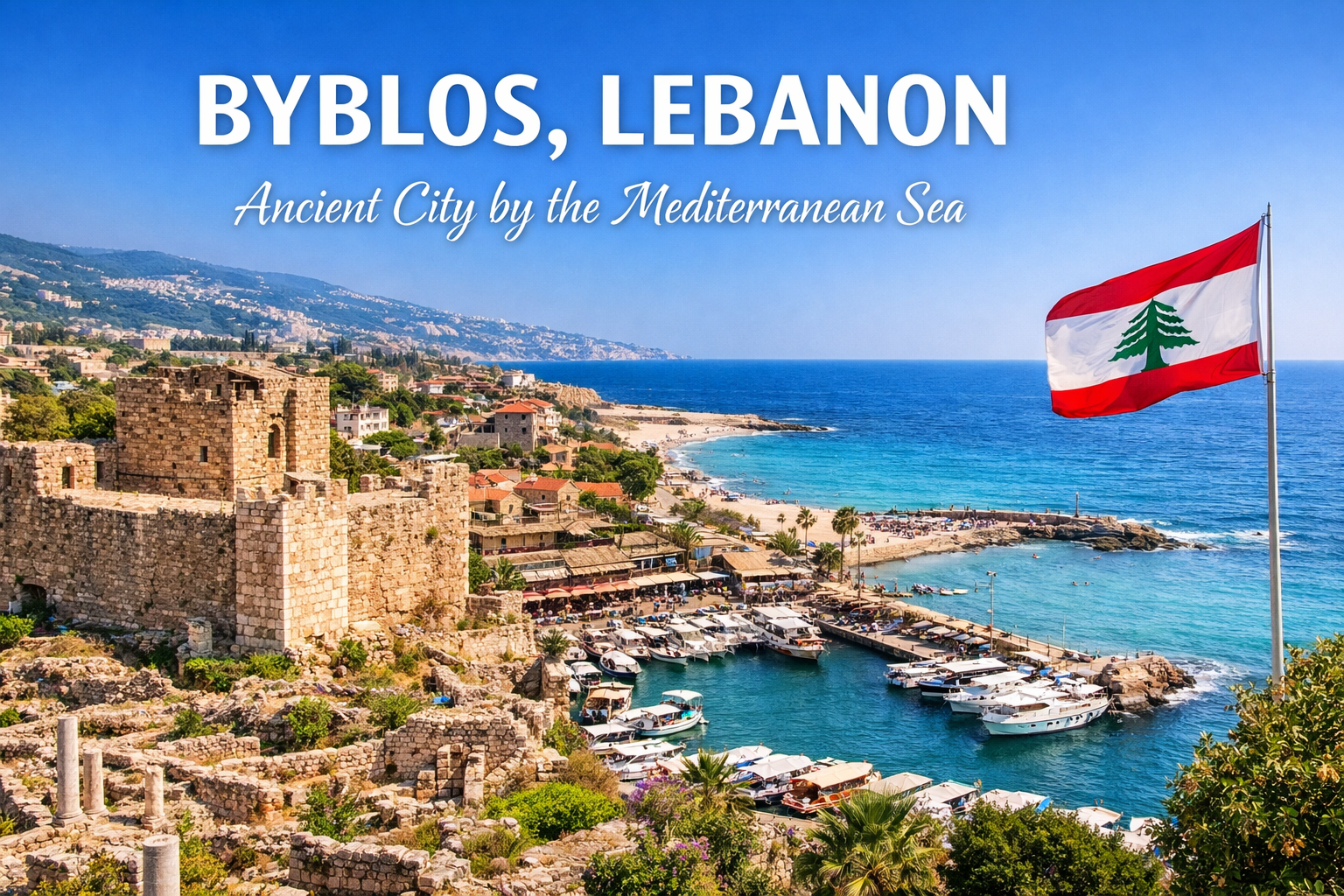
Byblos Lebanon is one of the oldest continuously inhabited cities in the world and one of the most famous historical destinations in the Middle East. Located along the Mediterranean coast north of Beirut, Byblos Lebanon combines ancient Phoenician history, beautiful beaches, traditional Lebanese food, and UNESCO-recognized archaeological sites. From its meaning in English and Arabic to its biblical connections and 7,000-year history, Byblos Lebanon remains a symbol of culture, trade, and civilization.
🧠 What Does Byblos Lebanon Mean in English?
The name “Byblos” comes from the ancient Greek word Βύβλος (Byblos). In English, it doesn’t have a literal meaning like “river” or “mountain,” but it is globally associated with books, writing, and paper because of the city’s role in the ancient world.
In ancient times, Byblos was an important trading hub, especially for papyrus, the paper of the ancient world. Because papyrus was traded through this port, the Greek word byblos eventually came to mean both the city and the book material. From this root, the Greek word βίβλος (biblos) gave us the word “Bible” and the English word “book.”
So, in a cultural and historical sense:
🔹 Byblos = the city of books/writing in the ancient world
📜 What Is Byblos Lebanon Called in Arabic (Jbeil)?
Byblos appears in ancient records dating back thousands of years, including references by the Egyptians, Greeks, and later in biblical contexts. Although the city itself isn’t a major setting in the Bible, the connection to writing and books comes indirectly through Greek culture — and later through early Christian scholarship.
Because Byblos was associated with papyrus and literary trade, it became linked with the spread of writing and literacy, which eventually influenced how people referred to holy scriptures and books in general.
In short:
✦ Byblos helped shape the word “Bible,” but it is not a story location in the Bible itself.
⏳ How Old Is Byblos Lebanon?
One of the most remarkable things about Byblos is its age. Archaeologists have found evidence that people have lived there continuously for more than 7,000 years.
Here’s a rough timeline:
- 🟠 Neolithic period (around 8000–5000 BCE)
The first signs of settlement in the Byblos area. - 🟡 Bronze Age (around 3000–1200 BCE)
Byblos becomes a major port and trading partner with Egypt and other civilizations. - 🔵 Iron Age and Phoenician period
The city becomes an important center of the Phoenician world — known for shipbuilding, trade, and writing. - 🟥 Classical era (Greek and Roman)
Byblos remains a thriving city under Greek and then Roman influence. - 🟢 Medieval to modern era
Through Crusader rule, Ottoman times, French Mandate, and modern Lebanon — Byblos stays inhabited.
So today:
🌍 Byblos is estimated to be over 7,000 years old — one of the oldest continuously inhabited cities on Earth.
📍 Where Is Byblos Lebanon Beach?
Byblos is a coastal city in Lebanon, located on the Mediterranean Sea.
Geographically:
- 📌 It’s about 40 kilometers (25 miles) north of Beirut, the capital of Lebanon.
- 📌 It lies in the Mount Lebanon Governorate.
- 📌 Its coastline stretches along beautiful Mediterranean beaches.
Byblos beach isn’t just one place — the city’s entire coast is a mix of sandy and rocky beaches, beach clubs, and swimming spots. Some of the most popular areas are:
- Byblos Public Beach — a sandy shoreline where families and swimmers gather.
- Private beach clubs — spots with sun loungers, music, restaurants.
- Rocky coves — perfect for snorkeling and exploring marine life.
The coastline blends historical ruins with sun and sea, which makes it special.
🗣️ What Is Byblos in Arabic?
In Arabic, Byblos is written as:
جبيل — pronounced Jbeil
Lebanese people (and Arabs more generally) say Jbeil (Jbayl) rather than “Byblos.” The name goes back to ancient Semitic languages and was later adapted into Greek as Byblos.
So:
- 🇱🇧 Arabic name: جبيل
- 📣 Pronunciation (Lebanese Arabic): Jbeil or Jbayl
Despite the different name, today Byblos and Jbeil are the same city — just different language versions.
How to Pronounce Byblos in Greek
In Greek, the ancient name of the city was written as Βύβλος.
Here’s how to pronounce it:
- Greek: VEE-vlos
- English approximation: VEE-blos
The “B” in ancient Greek often sounded like a “V”, so the closest pronunciation is VEE-blos.
Many people still say “BY-blos” in English today, but historically, the Greek would sound closer to VEE-blos.
🍽️ What Is Byblos Lebanon Food Like?
Byblos is part of the Lebanese culinary world, which is famous across the Middle East and the world for fresh ingredients, bold flavors, and healthy Mediterranean cooking.
Here are some foods you’ll find in Byblos and around Lebanon:
🥗 Traditional Lebanese Dishes
- Hummus — pureed chickpeas with tahini, olive oil
- Tabbouleh — parsley, tomatoes, bulgur salad
- Fattoush — mixed salad with crispy pita
- Baba Ghanoush — smoky eggplant dip
- Falafel — deep-fried chickpea balls
🍖 Grilled Meats
- Shawarma — marinated meat roasted on a spit
- Kafta — spiced ground meat skewers
- Mixed grill platters — meats served with rice or bread
🐟 Seafood
Because Byblos is on the Mediterranean, seafood is very popular:
- Grilled fish (sea bream, sea bass)
- Calamari
- Prawns
- Local fish served with lemon and olive oil
🍞 Bread and Mezze
Lebanese meals often start with mezze — a collection of small shared dishes — and warm flatbread.
🍰 Desserts
- Knafeh — sweet cheese pastry with syrup
- Baklava — layered pastry with nuts and syrup
- Maamoul — date or nut-filled cookies
☕ Drinks
- Turkish / Lebanese coffee
- Mint lemonade
- Arak (anise liquor) — popular with adults
The food scene in Byblos blends traditional Lebanese cooking with modern beach and cafe culture.
👥 Who Are the People of Byblos Lebanon Today?
Today, Byblos (Jbeil) is a vibrant Lebanese city with a mix of:
- Local Lebanese families
- Young artists, students, and professionals
- Tourists from Europe, the Middle East, and beyond
Most people in Byblos speak:
- 🇱🇧 Arabic (Lebanese dialect) — everyday language
- 🇫🇷 French — many Lebanese learn French in school
- 🧑🎓 English — common in business and tourism
Byblos is both a living city and a heritage site, so locals balance everyday modern life with tourism, culture, and preserving history.
🏛️ What Is Byblos in Lebanon — A City of Layers
Lebanon is known for its rich history and cultural diversity, and Byblos is one of the best examples of this:
🔹 Ancient and Modern Together
Walking through Byblos feels like a timeline:
- Phoenician temples
- Roman theater
- Crusader castle
- Old souks (markets)
- Modern cafes and galleries
Today, Byblos represents:
- 🇱🇧 Lebanese heritage
- 🏺 Mediterranean history
- 🌍 A global archaeological landmark
🔹 World Recognition
Byblos is recognized by UNESCO as a World Heritage Site because of its immense historical value.
🏆 What Is Byblos Lebanon Famous For?
Byblos is famous for many things — history, culture, sea, food, and its influence on language. Here’s what makes it stand out:
📚 1. Byblos Lebanon and the Phoenician Alphabet
One of the most significant contributions of Byblos to world history is its role in the development of the alphabet:
- The Phoenicians used a writing system that influenced later alphabets.
- Many historians believe Byblos was important in spreading phonetic writing.
🏛️ 2. Ancient Ruins and Historical Sites
Visitors come from around the world to see:
- Byblos Castle
- Roman Theatre
- Phoenician Temples
- Ancient harbor
- Old city walls
These structures show the city’s long history and cultural importance.
🌊 3. Beautiful Beaches
Byblos combines history with natural beauty:
- Mediterranean swimming
- Beach clubs and seaside restaurants
- Sunsets over the water
🍽️ 4. Delicious Lebanese Cuisine
Byblos is part of Lebanon’s famous food culture — from mezze to seafood.
🎭 5. Arts and Festivals
Byblos hosts music festivals, art events, and cultural performances — especially in the summer.
📌 Quick Facts About Byblos
| Topic | Key Fact |
|---|---|
| Country | Lebanon |
| Arabic Name | جبيل (Jbeil) |
| Oldest Settlement | Over 7,000 years old |
| World Heritage | UNESCO World Heritage Site |
| Famous For | History, beaches, food, archaeology |
| Ancient Trade | Papyrus exports |
| Language Influence | Helped shape Greek biblos and the word “Bible” |
| Modern Culture | Mix of local Lebanese life and tourism |
🧭 How to Reach Byblos (If You’re Traveling)
From Beirut:
- By bus or service (shared taxi)
- By private car
- Roughly 1 hour north of the capital
The road follows the coast, so the journey itself is scenic.
🏙️ Living History: Byblos Then and Now
One of the most special things about Byblos is the way the past and present coexist:
- Ancient ruins are part of everyday life.
- Families still live around historic walls.
- Cafes sit beside archaeological sites.
- Tourists and locals share the streets.
This mix gives Byblos a unique atmosphere — you can sit by the sea, eat fresh fish, and be surrounded by monuments from 5,000 years ago.
🌟 Final Thoughts — Why Byblos Matters
Byblos isn’t just old — it’s meaningful:
✨ It connects the ancient world to the present.
✨ Its name influenced how we talk about books and writing.
✨ It shows the endurance of culture, trade, and people.
Whether you’re interested in history, language, food, or travel, Byblos is a remarkable place that tells a story not just of Lebanon, but of civilization itself.